It's National Careers Week, and what better time to explore the NHS job possibilities for your next step. Whether that's your first role out of education, or if you're looking to change careers, there's an NHS opportunity for you!
Most people think of doctors and nurses when they picture the NHS, but in reality there are over 350 different careers available, many of them behind the scenes keeping things running smoothly. National Careers Week is the perfect time to highlight some of these lesser-known roles, and share how you can get started in your NHS career.
10 NHS job roles you've never heard of, and what qualifications you'll need to do them
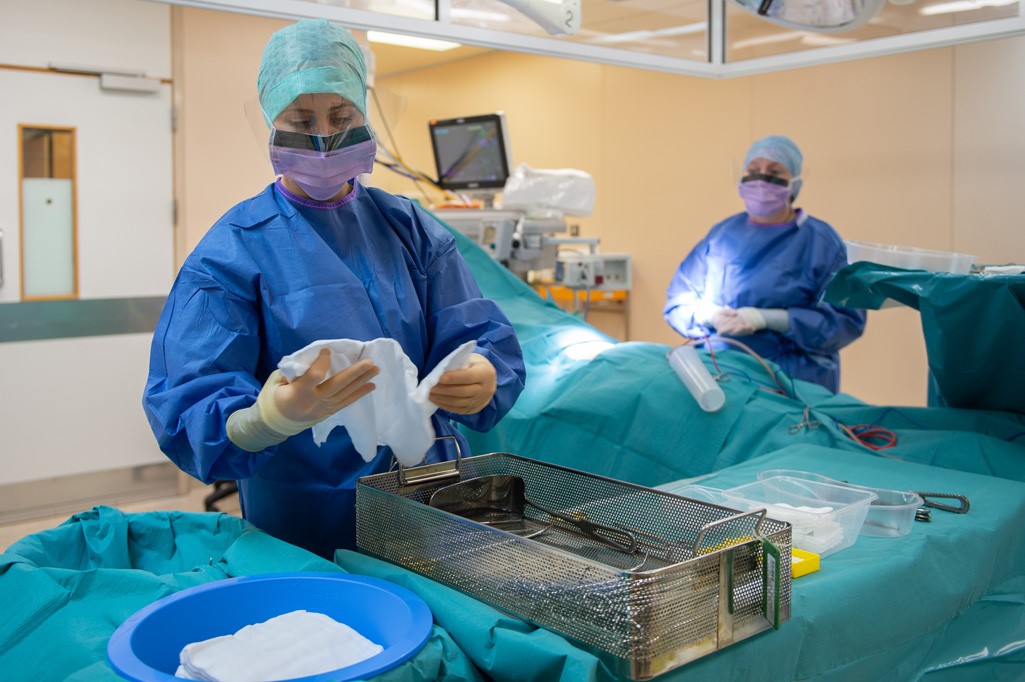
1. Operating Department Practitioner (ODP)
Working in the Operating Theatre as part of a team of clinical staff, you'll provide high standards of care and support during each phase of a patient's perioperative journey - anaesthetic, surgery and recovery.
Qualifications:
You'll need to complete a degree in operating department practice, or look for an apprenticeship degree opportunity. For both of these routes, you'll need at least five GCSEs at grades 9-4/A*-C plus A-Levels or equivalent qualifications such as T-Level.
If you have never worked in healthcare before, you may wish to gain experience working as a Healthcare Assistant in Theatres before considering progression into this role.
2. Library Assistant
Working in the Library Service team, you'll assist the Site Librarian in providing high quality library and information services for all Trust staff. You'll be the first point of contact and assist library users to make effective use of the library services and resources.
Qualifications:
A minimum of 4 GCSEs at grades A*-C/9-4 or equivalent, this must include English Language and Maths. An IT qualification or NVQ in Library Services is desirable, but not essential, and if interested you may be able to complete whilst working in the role.
3. Clinical Coder
You'll work as part of a team, recording accurate information about patient hospital visits onto the computer system in a nationally recognised format. You'll have high attention to detail, extracting clinical information from various sources and translating the medical terminology into national and international alpha numeric codes.
Qualifications:
A-Level qualifications, or equivalent, are required for this role. You'll also need to have successfully completed the Clinical Coding Foundation course.
Trainee roles are sometimes available for this position, where you'll complete the National Clinical Coding Standards course within 12 months of starting in order to progress into a Clinical Coder position. (You'll still require A-Levels for the trainee role).
4. Sterile Services Technician (Decontamination Technicians)
Working in a dedicated sterile facility, you'll ensure medical devices are properly cleaned, disinfected and sterilised between clinical procedures to prevent healthcare-acquired infections. This includes a range of medical devices from operating theatres and wards. You'll learn the names of the equipment and what each is used for, keeping electronic records throughout the decontamination process.
Qualifications:
Typically GCSEs in English, Maths and Science are required. You may also be able to complete specific training courses whilst you are in post.
5. Reproductive Science Practitioner
You'll work in a team of clinical scientists, scientist trainees and practitioners creating life and providing solutions to infertility. Embryology studies the formation and development of an embryo and fetus, whilst andrology focuses on the field of male reproduction.
Qualifications:
A minimum of three A-Levels or equivalent are required for this post, along with a BSc degree in Biological Sciences or related subject. You can apply for a place on the graduate-entry NHS Scientist Training Programme, where you'll complete a 3-year programme of work-based learning, supported by a University accredited Master's degree.
.jpg)
6. Audiology Assistant
Working with a qualified Audiologist or Associate Audiologist, you'll assist with routine aspects of audiology, like hearing aid aftercare. You'll undertake tasks such as cleaning, general maintenance and possible programming of replacement hearing aids using Audiology related computer systems.
Qualifications:
GCSE's in Maths and English at grades A*-C / 9-4 are essential for this role, while a GCSE in Science is desirable.
7. Plaster Technician / Orthopaedic Practitioner
You'll work with orthopaedic teams to provide care to patients of all ages. In this role you'll apply, adjust and remove casts and splints to help patients recover from injury or surgery as quickly as possible, identifying and using the most suitable technique and materials.
Qualifications:
You'll need GCSEs, or equivalent qualifications, in English and Maths at grades A*-C / 9-4. You may also need to hold an NVQ or BTEC such as a Level 3 in Healthcare. There may also be opportunities to undertake this role as an apprenticeship, working towards your Level 3 Senior Healthcare Support Worker qualification. Once completed, you can also take the British Casting Certificate course.
8. Hospital Play Specialist
You'll support children and young people during their hospital stay through therapeutic play, to help reduce anxiety and help them have the best possible experience. You'll work across outpatient and inpatient departments in the hospital. Some play specialists may work in community-based settings as well.
Qualifications:
Most roles require a childcare qualification at Level 3 or above, in addition to GCSEs or equivalent qualifications in Maths and English at grades A*-C / 9-4.
9. Associate Practitioner in Respiratory and Sleep Services
You'll work in a team of specialist staff to diagnose and treat lung disease and sleep disorders. This role involves performing respiratory diagnostic tests and support the running of the sleep apnoea service. You'll also support departmental administration such as booking appointments and liasing with other healthcare professionals.
Qualifications:
As a Band 4 Associate Practitioner, you'll need five GCSEs at grade C/4 or above, including Maths and English. You'll also need a Level 4 qualification in Healthcare Science or Part One accreditation with the Association of Respiratory Technology and Physiology (ARTP), or be willing to work towards these as an apprenticeship (you'll then need to meet the entry requirements for the apprenticeship).
10. Finance
As a member of the finance team in the NHS, you'll work as part of a team to make sure that budgets are spent wisely and for the benefit of patients. Finance is quite varied and could include; handling payments for goods and services in the accounts department, purchasing goods and services in the procurement department, or setting and managing budgets, making decisions on how money is spent and tracking budgets to make sure money has been spent correctly.
Qualifications:
As an entry level role into finance you'll need GCSEs in English and Maths, which will allow you to enter onto a training programme. Apprenticeships are often available as well. As you progress through training programmes, you'll be eligible to apply for higher posts. Some qualifications you can work towards will include professional registration with one of the member bodies such as Consultative Committee of Accountancy Bodies (CCAB) or the Chartered Institute of Public Finance and Accountancy (CIPFA).
The NHS Finance Insights placement scheme offers paid NHS work experience to people aged 18 and above from lower socio-economic backgrounds, who are in full-time education but do not plan to attend university. The scheme offers 12 months experience in an entry-level finance role, helping you develop new skills and preparing you to take the next step in an NHS finance career.

How to find the right NHS career for you
With so many different options to choose from, narrowing down your choices can feel overwhelming. The Careers Quiz on the Health Careers website is a great place to start. You'll answer questions rating how much you like or dislike certain tasks, and at the end you'll have some options of which roles may suit you based on your answers.
Once you've got an idea of the NHS career you're interested in, it's worth exploring the routes available. Some roles may be advertised as apprenticeships or trainee posts, where you can start a new role and work towards an official qualification alongside. Others may require prior knowledge and qualifications in the relevant area, so it's worth doing your research to see if there's any qualifications or training courses you can complete to aid your development and help you step into your dream role.
We also offer work experience and placements, which are one of the best ways to find out if a role fits you. By spending time in a real clinical or support environment, you'll be able to see first hand what the work is like, meet other staff and understand the skills required to do the job. To find out more about this, please visit our dedicated work experience webpage.
If you’re unsure where to start, come and speak to us at one of the job fairs we attend throughout the year. We’re always happy to talk about career paths and where to find opportunities at SaTH. You can see which events we’ll be attending on our Events page.
Additionally, all our advertised roles will include contact details for the appointing manager, please feel free to reach out to them directly should you have any questions about the role advertised or wish to arrange an informal visit to the department.
The NHS is full of diverse, rewarding careers, and we’re here to support you in finding the one that’s right for you.




.png)